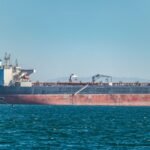
Oil prices surged past $100 per barrel after Houthi rebels reportedly seized the strategic Bab al-Mandeb Strait, a chokepoint tied to roughly 12% of global trade.
BRICS leaders meeting in New Delhi issued a joint statement voicing ‘serious concern’ over Middle East escalation and pushed for local-currency and digital-currency trade to reduce dollar dependence.
Former President Trump threatened 30% tariffs on EU imports by August 2026 while questioning NATO funding; separately, UK party Reform received a record £36 million donation from crypto billionaire Ben Delo.
Crude just punched through triple digits, and this was no slow grind. Oil prices surged past $100 per barrel after Houthi rebels seized the Bab al-Mandeb Strait, a waterway that handles an estimated 12% of global trade, forcing a shutdown of key Saudi infrastructure. This is an implemented, market-moving fact, not a forecast. It landed alongside a confirmed drone strike on Saudi Arabia’s East-West Pipeline, which Iraqi investigators traced back to Iraqi soil, prompting Baghdad to dismiss Major General Ali Abdul Hussein Kazim, Commander of Maysan Operations, and shutter the Shalamcheh and Chazzabeh border crossings with Iran.
Tensions Rise Along Strategic Trade Routes
Against that backdrop, leaders of the BRICS bloc gathered in New Delhi and formally voiced ‘serious concern’ over rising Middle East tensions and the spread of unilateral and secondary sanctions. The group is advocating for a fundamental shift in global economic governance, pushing expanded local-currency trade and digital currencies to cut reliance on the Western-dominated financial system, a proposed policy shift rather than an implemented one. On the sidelines, Iranian President Masoud Pezeshkian met UAE Crown Prince Sheikh Khaled bin Mohamed bin Zayed Al Nahyan to discuss de-escalation, according to people familiar with the talks, a notable diplomatic move given the two sides’ friction during the ongoing US-Iran conflict. Separately, Trump escalated rhetoric toward Europe, questioning NATO’s value and threatening 30% tariffs on EU imports by August 2026 unless a new trade deal is reached, while Reform UK confirmed a record £36 million donation from crypto billionaire Ben Delo, the largest single gift in British political history.
What This Means for Your Portfolio and Wallet
A sustained move above $100 a barrel ripples fast into pump prices, airline fuel surcharges, and shipping costs, all of which feed into consumer inflation readings central banks watch closely. If 12% of global trade volume genuinely faces a bottleneck through the Bab al-Mandeb Strait, expect freight rates and delivery times to climb, squeezing margins for retailers and manufacturers dependent on Middle East shipping lanes. A proposed 30% EU tariff, if implemented by August 2026, would raise costs for European exporters and any US portfolio holding companies with heavy EU exposure. Meanwhile, BRICS’ de-dollarization push, while still aspirational rather than operational, is a slow-burn signal worth tracking for anyone holding dollar-denominated assets or emerging-market currency exposure.
Strategic Positioning & Defense Ideas
None of this calls for panic, but it does argue for basic portfolio housekeeping. Energy-sector exposure or commodity-linked positions can act as a natural hedge against further oil-price spikes, while a modest cash buffer gives flexibility if volatility spreads to equities. Diversification across regions and currencies also matters if trade or tariff disputes escalate further. Disclaimer: This analysis is for educational and informational purposes only and should not be construed as financial or investment advice.
What to Watch Next
Watch for any formal EU response to the August 2026 tariff deadline, further developments around the Bab al-Mandeb Strait and Saudi pipeline security, and whether BRICS follows its New Delhi rhetoric with concrete de-dollarization mechanisms. For full details, check the original reporting from Stock Market Watch and Livemint.