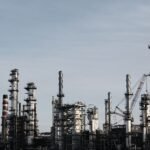
Exxon’s 275,000 barrel-a-day Joliet refinery went offline after a power failure and floodwater knocked out a pump, cutting roughly 6% of Midwest refining capacity
National diesel prices hit a record $6.45 a gallon, per AAA, while Great Lakes spot diesel spiked to $240 a barrel
Analysts warn some Midwest states could see gasoline top $5/gallon as refiners prioritize diesel output over gasoline
If you’re filling up a truck in Ohio or Michigan this week, brace yourself: diesel just hit an all-time high of $6.45 a gallon nationally, according to AAA data, and the pain is concentrated squarely in the Midwest. The trigger was a power outage at Exxon Mobil’s Joliet, Illinois refinery on Sunday, which tripped the plant’s safety flare and, per a Thursday regulatory filing, was compounded by floodwater overwhelming a pump. Exxon says it restored full power from ComEd’s primary and secondary lines by Thursday, but restored electricity doesn’t mean restored fuel output — the plant remains offline for now.
A Regional Refinery Outage With National Ripples
Joliet isn’t a small player. Located about 40 miles southwest of Chicago, it churns out roughly 11 million gallons of gasoline and diesel a day, representing about 6% of Midwest refining capacity and 1.5% of the US total. GasBuddy’s Patrick De Haan flagged on X that Ohio faces *high* risk of the sharpest price jump, with Wisconsin and Indiana at *medium* risk, and Michigan and Illinois potentially breaching $5 a gallon at the pump. He also noted Great Lakes spot diesel prices are now the highest in the country at $240 a barrel. Goldman Sachs commodity strategists Yulia Zhestkova Grigsby and Daan Struyven warned this week that the broader global diesel crunch could squeeze gasoline supplies too, as refiners shift capacity toward higher-margin diesel. Bloomberg Intelligence’s Mike McGlone drew a blunt historical parallel, saying ‘$6 diesel echoes 2008 gasoline shock.’
What This Means for Your Portfolio and Wallet
For households and small businesses across Illinois, Indiana, Ohio, Wisconsin, and Michigan, this translates directly into higher freight, delivery, and commuting costs — diesel underpins trucking, agriculture, and shipping, so a sustained spike ripples into grocery and goods prices. Energy-sector investors may see refiners with unaffected capacity command fatter crack spreads, while consumer-discretionary and logistics stocks in the region could face margin pressure from higher input costs.
Strategic Positioning & Defense Ideas
Investors worried about energy-driven inflation might consider diversifying into energy-sector equities or commodities as a partial hedge, while households can look at locking in fuel costs where possible or trimming discretionary driving. Cash reserves and inflation-protected assets remain standard tools for weathering commodity shocks. Disclaimer: This analysis is for educational and informational purposes only and should not be construed as financial or investment advice.
What to Watch Next
Watch for Exxon’s timeline on restarting production units at Joliet and whether other Midwest refiners can offset the shortfall. Further GasBuddy regional price alerts and AAA’s national average will be key signals. Full details via ZeroHedge and Reuters reporting.