
Enjoying this? Get one story like this in your inbox every morning — free, 2-minute read, zero spam.
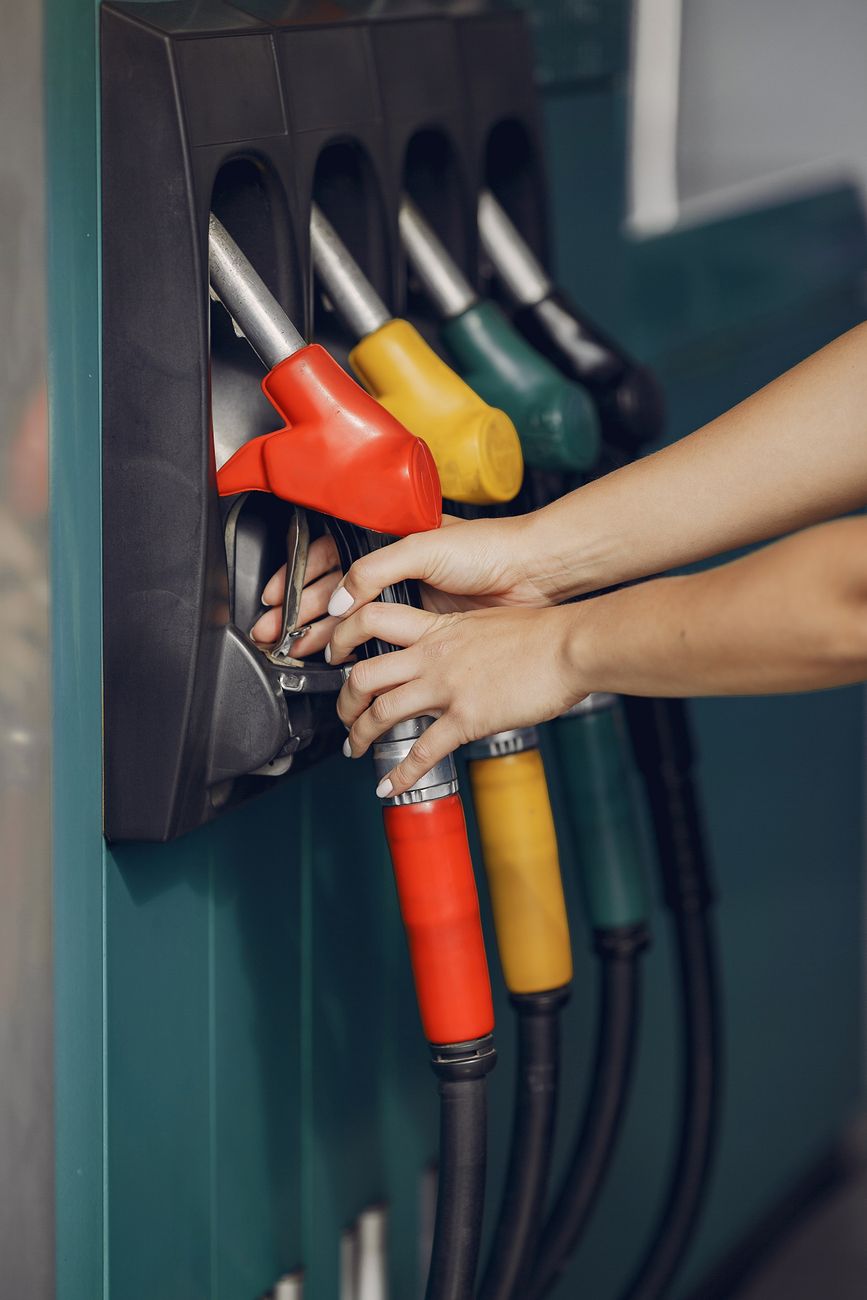
Photo by Gustavo Fring on Pexels
⏱️ 3 min read
The price of crude oil, the largest single driver of what you pay for a gallon of gasoline, jumped again this week. Brent crude futures rose 3.1% to $112.20 a barrel as of 4:12 a.m. ET on October 22, 2026, according to CNBC. U.S. benchmark WTI gained 2.79% to $99.86. A day earlier, Fortune’s tracker put Brent at $110.74 at 8 a.m. ET on October 21. A year ago it stood at $61.75.
What pushed oil back up after it had eased
Oil had dipped the day before. WTI crude for December delivery fell $0.69, or 0.71%, to $97.13 a barrel on October 21, RTTNews reported, after reports of progress in Strait of Hormuz shipping traffic. In an interview with CNN-News 18 on October 20, Secretary of State Marco Rubio said oil and gas traffic through the Strait had recovered to more than 80% of pre-war levels, RTTNews reported. On October 22, CNBC reported that oil climbed on worries about a possible escalation in the Middle East conflict. Citing The New York Times and unnamed U.S. officials, CNBC said the U.S. and Israeli militaries have drawn up specific plans for renewed strikes on Iran after the November 3 midterm elections. According to the Times, President Donald Trump has yet to approve the strikes. The U.S. also ordered non-emergency government employees and their families to leave Saudi Arabia. State Department spokesman Tommy Pigott cited increasing attacks by Iran-aligned Houthis on civilian targets as the reason. A strike on King Fahd International Airport in Dammam killed at least one person and injured eight, CNBC reported. In a separate drone attack on Saudi Aramco’s Shaybah oil field, two people died, according to the Saudi Press Agency, which said operations were not affected.
Following the price from the Gulf to a US gas pump
According to Fortune, crude oil typically represents over half of each gallon’s cost at the pump. Refining, distribution, taxes and the station’s margin make up the rest. Fortune notes that oil spikes tend to push gas prices higher in short order, while declines pass through gradually, a behavior known as ‘rockets and feathers.’ David Wagner, head of equity and portfolio manager at Aptus Capital Advisors, told CNBC that households may be less exposed than in past decades. He pointed to U.S. government data showing gasoline took roughly 5% of the average American’s disposable income a decade ago, compared with about half that today.
Our math: what a crude move could mean at the pump
This is an illustration, not a forecast. Fortune listed Brent at $104.61 a month before October 21, and CNBC reported $112.20 on October 22. The two figures come from different sources and times of day. The rise is $112.20 minus $104.61, divided by $104.61, or about 7.3%. Take a hypothetical $3.50 gallon and assume half of it, $1.75, is tied to crude, the low end of Fortune’s ‘over half’ share. A 7.3% rise in that portion is $1.75 times 0.073, or about $0.13 a gallon. For a 15-gallon fill-up, that is roughly $1.91 more. For four fill-ups a month (60 gallons), it is about $7.60 more.
What to watch and check this week
Watch whether prices at your local pump follow crude higher, keeping the rockets-and-feathers pattern in mind. Also watch for official confirmation or denial of the reported Iran strike plans, updates on Strait of Hormuz traffic, and further attacks in Saudi Arabia. Sources: CNBC, Fortune, RTTNews. Disclaimer: This analysis is for educational and informational purposes only and should not be construed as financial or investment advice.
Sources: CNBC, CNBC, Fortune, RTTNews