
Enjoying this? Get one story like this in your inbox every morning — free, 2-minute read, zero spam.
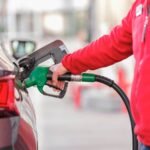
Photo by Erik Mclean on Pexels
⏱️ 3 min read
Why does a security alert at a US embassy thousands of miles away end up on a gas station sign? Rising Middle East tensions sent oil prices sharply higher this week, CNBC reported on October 24, 2026. Brent crude futures topped $116 a barrel, a six-month high, and US West Texas Intermediate crude rose 3.8% to settle over $103 a barrel. American embassies across the region were on heightened alert at the same time.
What Triggered the Alert and the Oil Move
New reports said Iran is in ‘advanced stages’ of planning attacks against Americans. According to a New York Times report cited by CNBC, a memo from Director of National Intelligence Jay Clayton said agencies received intelligence that Iran has ‘substantially increased efforts to target U.S. personnel’ in the region. The warnings followed a US order this week for non-emergency government employees to leave Saudi Arabia, as attacks from the Iran-backed Houthis worsened. CNBC reported that the broader war between the US and Tehran is nearing its eighth month. The Saudi-led coalition fighting the Houthis said it destroyed two ballistic missiles fired toward Taif and Yanbu.
The Trump administration has vowed renewed military strikes on Iran after the November 3 midterm elections, per CNBC. Separately, Iran’s ambassador to Islamabad, Reza Amiri Moghadam, told the Associated Press that Tehran is prepared to reopen the Strait of Hormuz if the US lifts its naval blockade. He said Washington had rebuffed the proposal. Iranian state media later denied the report.
From the Persian Gulf to the Price Board: Following the Barrel
Here is the chain markets are reacting to, step by step. First, intelligence warnings and an evacuation order raise fear of disruption in a region that ships oil through the Strait of Hormuz. Second, that fear shows up in the global benchmark: Brent crude topped $116 a barrel this week, a six-month high, CNBC reported. Third, the US benchmark, WTI, rose 3.8% to settle over $103 a barrel. Fourth, crude oil is the raw material for gasoline, so a higher crude price generally feeds into the cost of a gallon before refining, distribution and taxes are added. The source does not report any change in retail pump prices, so that final link from crude to what a driver pays is not confirmed.
Our Math: What a 3.8% Crude Jump Could Mean at the Pump
This is an illustration built only from the numbers reported above. If WTI rose 3.8% to settle at about $103 a barrel, the price before the move was about $99.23. That figure is $103 divided by 1.038. The gain is $103 minus $99.23, or about $3.77 a barrel. A barrel holds 42 gallons, so the gain per gallon is $3.77 divided by 42, or about 9 cents of added crude cost. For a household filling a 15-gallon tank once a week, the extra cost is 15 gallons times 9 cents, or about $1.35 per fill-up. Over a year, that is $1.35 times 52 weeks, or roughly $70, if the increase held steady. This covers only the crude-oil part of a gallon, not the full retail price.
This Week’s Check and What Could Shift the Picture
This week, compare your last few fuel receipts with current prices at your usual station to see whether pump prices have moved. Watch for any confirmation on the status of the Strait of Hormuz, since an Iranian official and Iranian state media gave conflicting statements on October 24. Also watch whether the US carries out the military strikes on Iran that, according to CNBC, the Trump administration has vowed for after November 3. Source: CNBC, citing New York Times and Associated Press reporting, published October 24, 2026. Disclaimer: This analysis is for educational and informational purposes only and should not be construed as financial or investment advice.
Sources: CNBC