Chinese President Xi Jinping made his first Egypt visit in a decade, meeting President Abdel Fattah El-Sisi as the US-Iran conflict passed its six-month mark
China and Egypt signed a deal to launch the third phase of the Suez Canal industrial zone, which already hosts 200 companies and roughly $4 billion in investment
Egypt separately receives about $2 billion annually in US bilateral assistance, underscoring its dual alignment between Washington and Beijing
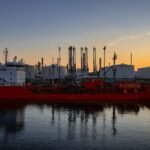
A critical global trade artery just got a fresh injection of Chinese capital while a regional war keeps rerouting shipping around it. Xi Jinping’s rare trip to Cairo on Wednesday, his first in ten years, produced a signed agreement to expand the Egyptian-Chinese industrial zone at the Suez Canal into its third phase. That zone already hosts approximately 200 companies and investments worth an estimated $4 billion, according to Egyptian officials, though Cairo has not yet disclosed a specific dollar figure for the new investment tranche. These are confirmed, already-signed commitments, not proposals.
Tensions Rise Along Strategic Trade Routes
Xi’s Cairo remarks, carried by Chinese state media outlet Xinhua, called for opposing ‘external interference’ in the Middle East and pledged Beijing would help ‘safeguard the security of international shipping lanes,’ though no operational specifics were given. The timing matters: the US-Iran conflict just crossed its six-month mark, and Washington’s so-called ‘Economic D-Day’ sanctions package targeting Iran was rejected for cooperation by Beijing last month. Meanwhile, Egypt continues receiving roughly $2 billion a year in US bilateral assistance tied to its 1979 peace treaty with Israel, a relationship that has kept Cairo’s military and intelligence apparatus closely aligned with Washington even as it deepens economic ties with China, a fellow BRICS member.
What This Means for Your Portfolio and Wallet
Suez Canal disruptions have already forced global shippers to reroute around Africa’s Cape of Good Hope amid regional conflict, adding time and fuel costs that filter into freight rates, insurance premiums, and ultimately consumer goods prices. A stronger Chinese foothold in the canal zone — layered atop an active regional war — raises the stakes for supply chain planners and could keep shipping and energy-linked equities volatile. Investors with exposure to logistics, shipping, or energy sectors should watch freight rate benchmarks closely in coming weeks.
Strategic Positioning & Defense Ideas
Geopolitical flashpoints tied to critical trade chokepoints typically argue for diversification across regions and sectors, a cash buffer to weather volatility, and consideration of traditional safe havens such as gold during periods of elevated shipping-route risk. Disclaimer: This analysis is for educational and informational purposes only and should not be construed as financial or investment advice.
What to Watch Next
Watch for Egypt’s official disclosure of the new investment figure tied to the Suez zone’s third phase, any diplomatic movement toward the ‘comprehensive agreement’ both presidents urged for the Iran conflict, and further Chinese engagement with BRICS partners on shipping security. Full details are available via ZeroHedge’s original reporting, which cites Reuters.