
Enjoying this? Get one story like this in your inbox every morning — free, 2-minute read, zero spam.
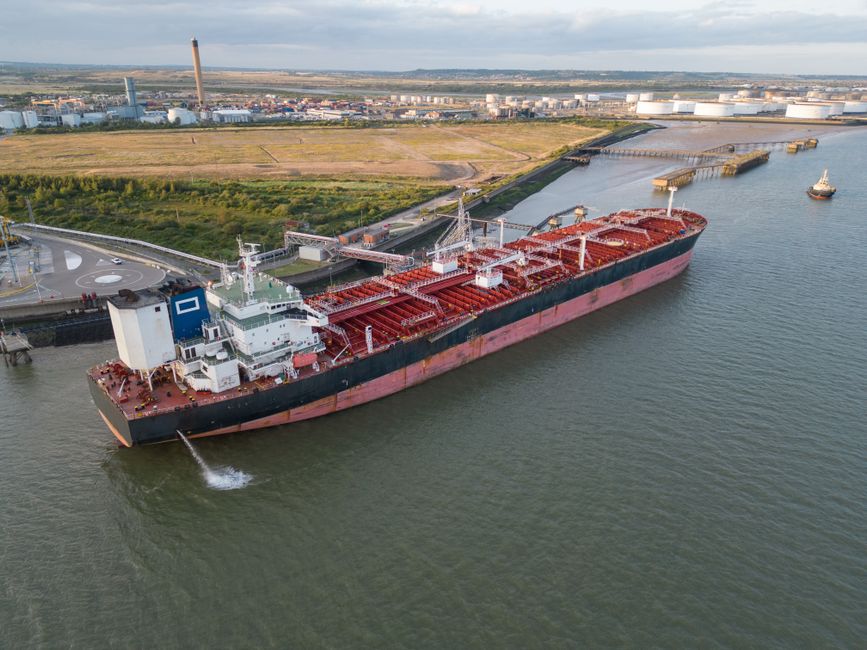
Photo by Terry Kent on Pexels
⏱️ 4 min read
Key Takeaways
- Iran and Oman are nearing a deal on a ‘shipping map’ to manage the Strait of Hormuz, a route through which a fifth of the world’s oil and gas transited before the war
- Brent crude jumped nearly 6% this week as hopes for a quick resolution faded, with 65 confirmed incidents and 17 seafarer deaths recorded as of Aug. 11 according to the International Maritime Organization
- The US, not party to the Iran-Oman talks, is preparing new economic measures against Tehran, with President Trump saying he wants to hit Iran’s economy hard regardless of the November midterms
Tankers are still getting hit in one of the world’s most critical oil chokepoints, even as diplomats scramble for a workaround. Iran and Oman appear to be edging toward an agreement on how the Strait of Hormuz should be managed, finalizing a ‘shipping map’ as part of a broader accord meant to guarantee safe transit, according to Iranian Foreign Ministry spokesman Esmail Baghaei, cited by Defa Press and reported by Bloomberg via The Economic Times and Business Standard. This is a proposed framework still in progress, not yet an implemented agreement, and further talks are expected before any details on transit fees or security arrangements are settled. Meanwhile, Brent crude, the global benchmark, has already risen almost 6% this week, a real and implemented price move reflecting fading hopes for a fast resolution.
Tensions Rise Along Strategic Trade Routes
The near six-month war between Iran and the US, which began with strikes on Feb. 28, has left the Strait of Hormuz littered with incidents: 65 confirmed vessel attacks across Hormuz and the wider Middle East, and 17 seafarer deaths as of Aug. 11, per the International Maritime Organization. The violence hasn’t paused for diplomacy, either. The UK Maritime Trade Operations reported a projectile striking a bulk carrier’s hull on Saturday, and Abu Dhabi National Oil Co. confirmed two of its vessels were hit while transiting Hormuz on Thursday, with a third struck Friday evening. Crucially, the US wasn’t party to the Iran-Oman negotiations and is considered unlikely to accept any terms that don’t fully restore free passage through the waterway linking the Persian Gulf to the Arabian Sea.
What This Means for Your Portfolio and Wallet
A 6% weekly jump in Brent crude flows straight into pump prices, shipping costs, and inflation expectations, especially with a fifth of global oil and gas normally passing through this single chokepoint. If attacks persist or escalate, expect further upside pressure on energy prices and volatility in energy-sensitive equities, freight rates, and airline cost structures. President Trump told Fox News the US plans to hit Iran’s economy hard and said he didn’t care if the conflict wraps up before the November midterms, adding in a Long Island speech that a US blockade of Iranian ports acts as a ‘wall of steel’ and that he may soon declare the Strait ‘a territory of the United States’ — a stated intention, not a finalized policy.
Strategic Positioning & Defense Ideas
Energy-price shocks tied to geopolitical chokepoints are a classic case for diversification: exposure to energy equities or commodities can offset broader portfolio drawdowns, while maintaining some cash allocation provides flexibility if volatility spikes further. Safe-haven assets and inflation-linked instruments are also worth understanding in this context. Disclaimer: This analysis is for educational and informational purposes only and should not be construed as financial or investment advice.
What to Watch Next
Watch for the next phase of Iran-Oman talks on security arrangements and transit fees, further US economic measures against Tehran, and any additional vessel incidents in Hormuz that could push Brent crude higher still. Full details are available via Bloomberg’s original reporting through The Economic Times and Business Standard.
Sources: Bloomberg via The Economic Times, Bloomberg via Business Standard