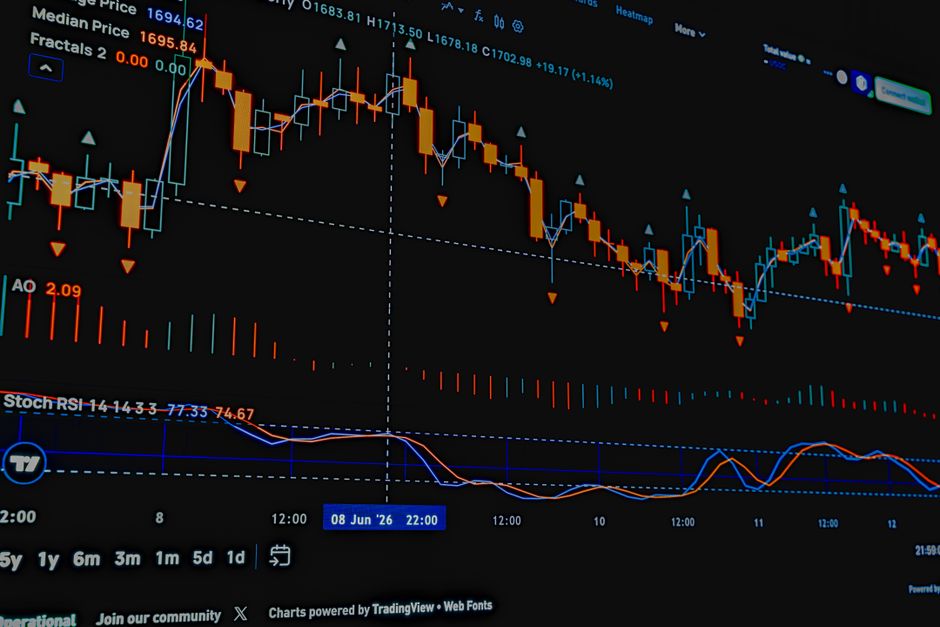
The Dow fell 107.58 points (0.2%) to 53,732.41, while the S&P 500 dropped 13.23 points to 7,785.76 and the Nasdaq lost 0.3% to 26,729.16
Brent crude jumped 1.7% to $88.52 a barrel amid uncertainty over Persian Gulf tanker traffic
Reddit surged 12.6% on news it joins the S&P 500 Tuesday, while Applied Materials fell 5.1% despite beating earnings forecasts
Record highs are fragile things, and Wall Street got a reminder of that Friday. Shoppers pulled back their spending last month in a way economists did not see coming, and that single data point was enough to knock stocks off their perch. The Dow Jones Industrial Average slid 107.58 points, or 0.2%, to close at 53,732.41 — a decline that left the index down 0.6% for the week. The S&P 500 shed 13.23 points (0.2%) to finish at 7,785.76, though it still notched a 0.4% weekly gain. The Nasdaq dropped 73.86 points, or 0.3%, to 26,729.16, up a modest 0.1% on the week. These are actual closing figures from Friday’s session, not forecasts.
Retail Slowdown Meets Rising Oil Prices
The catalyst was a government report showing consumers spent less at retailers in July than in June — a reversal analysts had not forecast, since most were penciling in continued growth. Compounding the pressure, Brent crude climbed 1.7% to $88.52 a barrel as uncertainty persists over when oil tankers can freely exit the Persian Gulf following the ongoing conflict with Iran. On the corporate side, Reddit rocketed 12.6% after confirming it will join the S&P 500 index this coming Tuesday, a move that typically forces index-tracking funds to buy shares automatically. Applied Materials, meanwhile, fell 5.1% even after posting stronger-than-expected profit and revenue, with CEO Gary Dickerson crediting surging AI-chip demand for a record quarter — proof that even good news doesn’t always protect a stock price.
What This Means for Your Portfolio and Wallet
A softer retail print sounds bad on its face, but it carries a silver lining: less consumer spending could ease inflationary pressure, and if that trend holds, it may give the Federal Reserve more room to avoid further rate hikes. For everyday investors, that’s a two-sided coin — slower spending growth can dent corporate earnings, but a friendlier rate path supports valuations longer term. Anyone holding energy-sensitive sectors should watch the $88.52 Brent level closely, since Gulf shipping disruptions could keep fuel and transport costs elevated.
Strategic Positioning & Defense Ideas
Weeks like this are a good reminder to keep portfolios diversified across sectors and geographies rather than chasing single-stock momentum like Reddit’s index-inclusion pop. Maintaining some cash reserves and exposure to defensive assets can cushion against oil-driven volatility tied to the Iran conflict. Disclaimer: This analysis is for educational and informational purposes only and should not be construed as financial or investment advice.
What to Watch Next
Investors should keep an eye on upcoming inflation data and any further retail figures to see if July’s weakness was a blip or a trend, along with developments in the Persian Gulf that could move oil prices further. For full details, see the original reporting from Newser and the Associated Press.