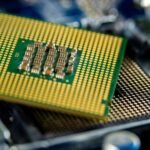
OpenAI says its custom Jalapeno chip, co-developed with Broadcom, outperformed Nvidia’s GB300 on power efficiency and response speed in internal and public testing
The chip runs at a low 700 watts and targets the AI inference phase; OpenAI plans to deploy it later this year
A second-generation chip is nearing tape-out and a third generation is already in the concept stage, even as OpenAI maintains ties with Nvidia and Cerebras
Nvidia has built a trillion-dollar empire on being the only game in town for serious AI compute — and OpenAI just claimed, at least on paper, that it doesn’t need to be. The ChatGPT maker says its in-house processor, code-named Jalapeno, outperformed Nvidia’s current flagship GB300 lineup on two hard metrics during testing: the amount of AI workload it can process per unit of power, and how fast it returns responses. This is a company claim based on internal and public benchmark testing, not an independently verified third-party result. The chip, developed with custom chipmaker Broadcom Inc., runs at a notably low 700 watts while delivering both high throughput and low latency, according to OpenAI chip chief Richard Ho.
A Narrow but Costly Battlefield: AI Inference
Jalapeno isn’t trying to dethrone Nvidia everywhere — it’s built specifically for inference, the stage where already-trained models respond to user prompts, rather than the far more compute-intensive training phase where Nvidia’s hardware still leads. That distinction matters financially: power draw is one of the largest line items in data center operating costs, so a chip that holds throughput steady at 700 watts could meaningfully cut OpenAI’s infrastructure bill. The chip was tested against smaller open-source models plus third-party systems from DeepSeek and Moonshot AI, with the biggest edge showing up on heavier workloads like Moonshot’s Kimi model.
What This Means for Your Portfolio and Wallet
For investors, this is less about an immediate threat to Nvidia’s revenue and more about a slow structural shift. If more AI labs successfully build custom inference silicon, the eye-watering margins Nvidia and Broadcom have both benefited from could face gradual pressure, while cheaper inference costs may eventually translate into lower prices for AI-powered products and services consumers use daily.
Strategic Positioning & Defense Ideas
Investors overexposed to a single AI-chip narrative may want to diversify across the supply chain — training-chip leaders, custom-silicon partners like Broadcom, and cloud infrastructure providers alike — rather than betting on one winner in a market still this early in its hardware evolution. Disclaimer: This analysis is for educational and informational purposes only and should not be construed as financial or investment advice.
What to Watch Next
Richard Ho is set to detail these hardware milestones at the Hot Chips conference at Stanford University, and markets will be watching for the second-generation chip’s tape-out timeline alongside rival efforts from startups like Etched and MatX. Nvidia’s own upcoming earnings report will offer a real-time read on whether any of this is denting demand. Full details via VentureBurn and Bloomberg.