Enjoying this? Get one story like this in your inbox every morning — free, 2-minute read, zero spam.
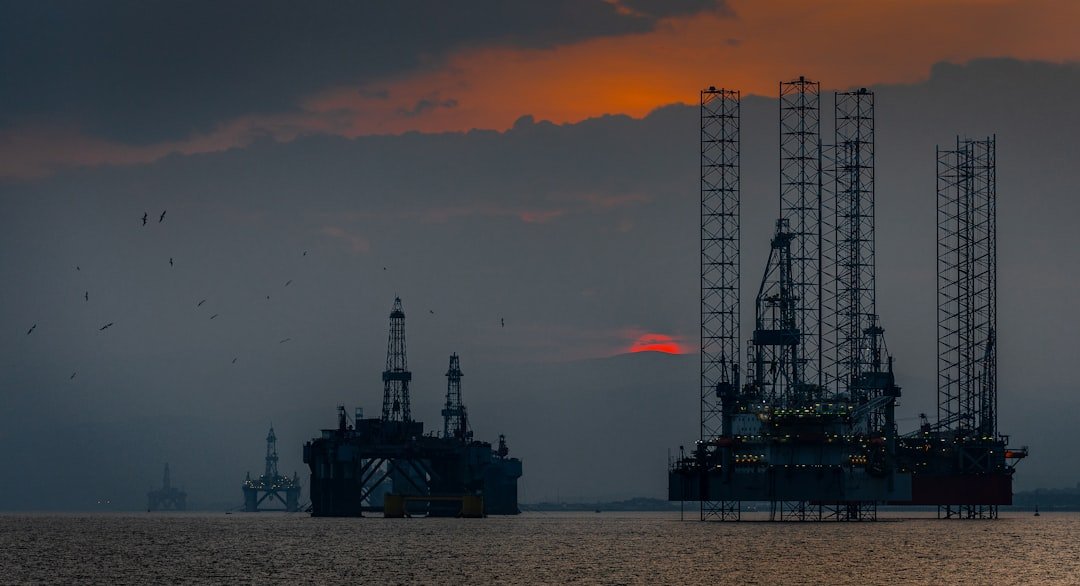
Photo by Paolo Boaretto on Pexels
⏱️ 4 min read
Key Takeaways
- Iran and Oman agreed on a proposed ‘joint temporary navigational corridor’ through the Strait of Hormuz, nearly six months after the waterway was largely shut following the Feb. 28 US-Israel strikes on Iran.
- Traffic remains thin, with just five commodity vessels transiting Tuesday versus a 10-day average of 15, even though roughly 20% of the world’s traded oil normally moves through the strait.
- The US has paused fresh strikes in favor of sanctions, including Treasury Secretary Scott Bessent’s ‘Economic D-Day’ measures, while President Trump has threatened to bomb Oman if it obstructs reopening efforts.
Six months into a war that strangled a fifth of the world’s oil trade, two foreign ministers in Tehran just handed markets their first real off-ramp. Omani Foreign Minister Badr al-Busaidi met his Iranian counterpart Abbas Araghchi on Tuesday to hash out a framework for reopening the Strait of Hormuz, according to a joint statement and reporting from the Associated Press. The proposal — a joint temporary navigational corridor plus coordinated mine clearance — is a proposed framework, not yet an implemented reopening, and talks came only after an oil tanker was disabled in an attack off Oman’s coast. US crude futures extended earlier losses in post-market trading Tuesday on the news, per Seeking Alpha, though the strait remains under effective Iranian control.
A Fragile Corridor Through Contested Waters
Under the emerging arrangement, inbound traffic into the Persian Gulf would pass entirely through Iranian waters, while outbound shipments would split between Iranian and Omani territory, Iranian Deputy Foreign Minister Kazem Gharibabadi said. The two countries have set a 30-to-60-day window to negotiate a permanent route. For context on scale: roughly 20% of the world’s traded oil passed through the strait before the Feb. 28 attack, yet only five commodity vessels transited on Tuesday, well below the 10-day average of 15, per preliminary shipping data. It remains unknown whether Washington will accept the deal — President Trump last week threatened to bomb Oman if it ‘gets in the way’ of US efforts to reopen the waterway, even as Secretary of State Marco Rubio told allied ministers, according to Axios, that no new strikes on Iran are currently planned.
What This Means for Your Portfolio and Wallet
Any durable reopening of Hormuz traffic would be bullish for global oil supply and could ease pressure on energy costs, but the current five-vessel trickle suggests markets shouldn’t price in a full normalization yet. On the flip side, Bessent’s ‘Economic D-Day’ sanctions package — sharply criticized by Iran’s parliamentary speaker Mohammad Bagher Ghalibaf as inconsistent with US goals of financial stability — raises compliance costs for banks and shippers dealing anywhere near Iranian trade. Indian exporters, for one, are seen as largely insulated since bilateral trade with Iran is concentrated in pharmaceuticals and basmati rice rather than energy.
Strategic Positioning & Defense Ideas
Geopolitical flashpoints tied to critical shipping lanes call for standard defensive playbooks: diversifying energy exposure across producers and consumers, holding some cash or short-duration instruments to ride out volatility, and considering traditional safe havens such as gold when tanker attacks and sanctions escalate simultaneously. Disclaimer: This analysis is for educational and informational purposes only and should not be construed as financial or investment advice.
What to Watch Next
Keep an eye on the 30-to-60-day negotiation window for a permanent Hormuz route, daily vessel-transit counts against the 15-ship average, and whether Washington formally endorses or rejects the Iran-Oman framework. Full coverage via the Associated Press/Manila Times, LiveMint, Economic Times and Seeking Alpha.
Sources: Associated Press / The Manila Times, LiveMint, Seeking Alpha, The Economic Times